Climate Action
At Dunn Street Primary, we are committed to teaching our children the significance of protecting our environment. As part of our climate action initiative, we are enhancing our school’s outdoor habitats to foster local wildlife and also enjoy our garden area where we can grow our own food. This hands-on approach not only beautifies our surroundings but also serves as a practical classroom for our children, instilling in them the values of sustainability and environmental responsibility from a young age. We invite all parents to join us in this vital endeavour, contributing to a greener future for our children and our community.
Dunn Street Primary Climate Action Plan

Our Progress
In September 2025 it was announced that our school would be eligible to receive Nature Park funding for developing an area of our school to encourage bio diversity.
The National Education Nature Park was launched in 2023 by the Department for Education, the Natural History Museum, the Royal Horticultural Society and partners.
This offers children and young people the opportunity to take hands-on action to improve biodiversity and tackle climate change. In the last academic year alone, we saw 1 in 8 schools and colleges in England sign up to take part.
Schools, colleges and nurseries that sign up will have access to a range of free resources including digital tools, classroom activities, and a virtual nature park bringing together the green spaces of all settings on to a national map.
What is the National Education Nature Park?
The National Education Nature Park is helping children and young people around the country connect to the natural world, especially in urban and nature-deprived areas, by tracking their local environment through a virtual map across England.
Whether it’s through growing pollinator-friendly plants, or creating more biodiverse habitats, the Nature Park is inspiring young people to take action to engage with nature in their local area.
The data students upload to the system will be used by scientists at the Natural History Museum for research into nature recovery. The great thing about the Nature Park is that you don’t need to have any existing green space to get involved – you can start with a window box or a hanging basket!
Children and young people are then encouraged to follow this activity on an online, interactive map, which will track the collective difference being made for nature across the education estate.
The department has confirmed that £3million in grant funding will be available for the 25/26 academic year.
Nature Park Grant Funding
In September 2025 it was announced that our school would be eligible to receive Nature Park funding for developing an area of our school to encourage bio diversity. We worked with the children to decode what they would like in their school to develop biodiversity. The children decided that they would like to develop a pond on site. Over the year, Mrs Simanis worked with the Nature Park , volunteers, Canny Wild CIC, RHS and all classes to make their wish a reality. Classes throughout the school from EYFS-Year 6 use the area to support their learning and development.

Durham Wildlife Trust
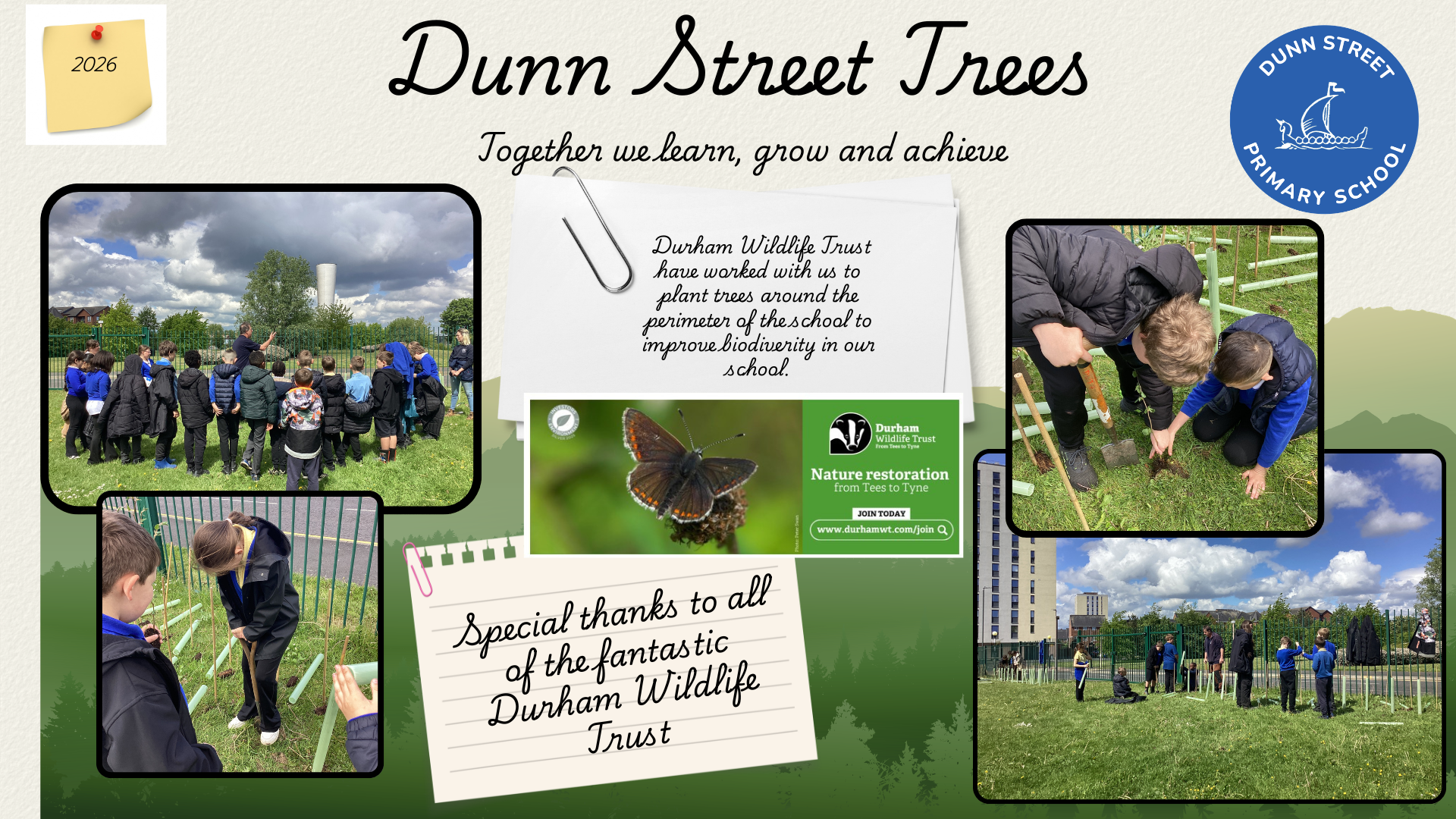
We have worked with Durham Wildlife Trust to plant trees around the perimeter of the school.